PROVOST MARSHAL
by wwwamericana on 03/13/15
History of the Provost Marshal
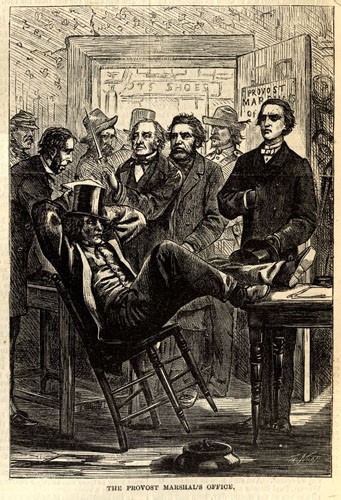
On July 18, 1861, Union General Irvin McDowell issued General Order No. 18, defining the authority of the provost marshal in the Army of Northeast Virginia, as the troops moved southward on campaign. In 1862, General George B. McClellan assumed command of the newly formed Division of the Potomac, which included the departments of Northeast Virginia and Washington. He issued the first orders describing the duties of provost marshals within a field army during the Civil War. For the duration of the war, each division, brigade, and corps of the Union Army included a provost marshal. Guards were assigned to the provost marshal to assist in carrying out assigned functions, chief of which was preservation of order.
In September 1862, the federal Adjutant General's office issued General Order No. 140, appointing special provost marshals for each state. The special provost marshal had many responsibilities, which included investigating charges or acts of treason and arresting deserters, spies, and persons deemed disloyal. A reorganization of the War Department in 1863 eliminated the position of special provost marshal, but appointed an assistant provost marshal general (APMG) for each state, a provost marshal for each congressional district and a deputy provost marshal for each county. The duties remained much the same. In addition, the provost marshal assigned to the district was responsible for maintaining troop discipline, assuming custody of prisoners and deserters, administering punishment, and suppressing any depredations and disturbances caused by Army troops or individual soldiers.
These provost marshals were assigned regardless of the level of active warfare within a state or district. In districts with active fighting, the provost marshal's primary duty was to limit marauding against citizens, prevent stragglers on long marches, and generally suppress gambling or other vices not conducive to good order and discipline. However, in many districts, the war's fighting was somewhat removed and the area did not see battles. In these areas, the provost marshal's duties were more magisterial. The provost marshal had the power to administer and enforce the law when it came to regulating public places; conduct searches, seizures, and arrests; issue passes to citizens for movement in and out of Union lines; and record and investigate citizen complaints. It was not uncommon for the law to be suspended in many cases and for the provost marshal, mostly independent of any real supervision, to dispense with the rules of civil procedure.
References & Links:
Missouri's Union Provost Marshal Papers: 1861 - 1866